Bathroom, Shower & Wet Room Leak Detection

Found Without Wrecking Your Tiles

Damp patch on the ceiling below?
Water through a light fitting?
Wet room floor that never fully dries?

We locate the source using thermal imaging, moisture mapping, and targeted testing before any access is discussed.

Diagnostic
Technical cross-section diagram showing hidden pipe leak within a wall cavity

Non-invasive leak tracing · No unnecessary damage

Quick Navigation

Choose the situation that sounds most like yours:

Damp patch or mould on the ceiling below my bathroom

What to do right now

Water coming through a light fitting or ceiling rose

Safety checks

Wet room or shower floor always damp, or water under tiles

Heating system emergency

If you are not sure which applies, call and describe what you are seeing. We can usually tell you whether a specialist visit is the right next step.

Quick Explanation

“My plumber checked — he couldn’t find anything.” Sound familiar?

This is one of the most common reasons people call us.
A general plumber may check the visible area, reseal around a tray, regrout a section, or inspect what can be seen easily.
But bathroom leaks are often not where they first appear. Water can travel through floor voids, along joists, behind tiled finishes, or through failed membranes before it shows on the ceiling below.
That is why the stain you can see is often the symptom, not the source.

Why bathroom leaks are often missed

  • Water can travel away from the entry point before it becomes visible.

  • Regrouting or resealing may deal with the surface finish, but not the failed waterproofing behind it.

  • Slow waste-pipe leaks and intermittent shower leaks may not show during a quick visual check.

  • Wet room failures often sit beneath the tile finish, where standard inspection cannot confirm the cause.

We use a structured diagnostic approach to narrow the source down properly before recommending any access.

The real cost of waiting

A bathroom leak does not usually become expensive because of the pipe or seal itself. It becomes expensive because the damage spreads while nobody is certain where the water is coming from.

What starts as a stain on the ceiling below can turn into softened plasterboard, damaged joists, mould growth, failed flooring, and a more complex repair across more than one room. In flats and tenements, delay can also turn a leak into a dispute with a neighbour, factor, or insurer.

Has someone already looked and found nothing conclusive?
Call us. We specialise in the leaks that do not show themselves clearly.

Recognise Your Problem

Identifying Your Bathroom Leak: Three Common Scenarios

Damp patch or mould on the ceiling below

You have noticed staining, bubbling paint, or mould growth on the ceiling beneath a bathroom or shower room.
What you are seeing is not necessarily where the leak begins.
Water entering through a failed shower tray seal, a damaged waste connection, or a compromised wet room membrane can spread across the floor structure before collecting at the lowest point. That is why pressing the stained ceiling or repainting the area rarely tells you anything useful.

Common causes we investigate

  • failed shower tray or bath sealing

  • leaking waste connections beneath the tray or bath

  • waterproofing failure at floor-to-wall junctions

  • overflow pipework leaks

  • concealed supply-pipe leaks within the floor zone

What this often is not

A simple grout issue on its own. Grout may allow water through, but repeated or worsening damage usually points to a deeper failure behind or beneath the finished surface.

Water coming through a light fitting or ceiling rose

If water is reaching an electrical fitting, treat it as urgent.
Safety first: switch off at the mains and do not attempt to investigate yourself. If you are unsure, call a qualified electrician.
Once the area is safe, a few details can help narrow the likely source:

  • whether the bathroom or shower was used shortly before the leak appeared

  • whether the fitting sits below a shower, bath, toilet, or basin

  • whether the water is a one-off release or keeps returning

Take photos if it is safe to do so. They may be useful later if you need to document the damage.

Likely causes

  • bath overflow failure

  • leaking waste pipework

  • standing water escaping from a blocked or poorly sealed shower waste

  • concealed supply leak in the bathroom floor zone

  • toilet or cistern-related leakage

Wet room floor always damp or water under tiles

This is one of the most commonly misdiagnosed bathroom leak problems.
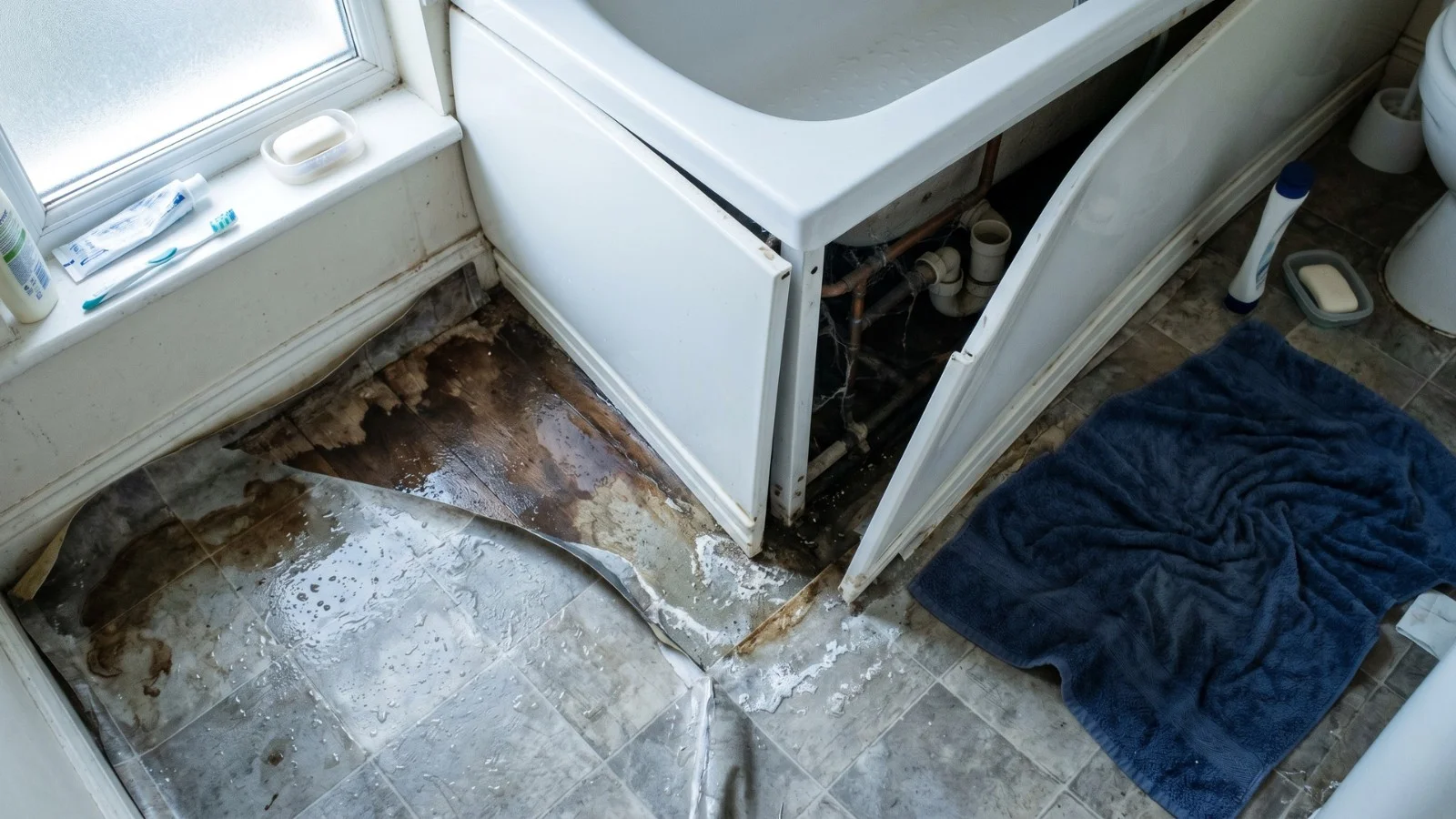
You may have a wet room floor that never fully dries, hollow-sounding tiles, recurring discolouration in grout lines, or a damp smell that keeps coming back even after cleaning or resealing.
In many cases, the problem is not the visible tile finish. It is a failure in the waterproofing system beneath it.

Signs the issue may be more serious

  • tiles that move slightly or sound hollow

  • damp smell that persists even with ventilation

  • staining at skirtings or lower wall edges

  • moisture returning after regrouting

  • signs of water affecting the room below or next door

In timber-floor properties, especially older Central Belt flats and tenements, this kind of leak can affect the structure below if it is left unresolved.

Recognised one or more of these signs?

Don't wait for the damage to worsen. Our non-invasive trace and access service pinpoints leaks without unnecessary excavation — across Central Scotland, the Highlands, and beyond.

Our Process

How We Find Bathroom Leaks Without Unnecessary Damage

We do not begin by lifting tiles or opening ceilings. We begin by testing.

01

Thermal imaging survey

We use thermal imaging to identify temperature differences that may indicate moisture movement beneath tiles, within walls, or through floor voids.

This helps us map where the moisture is presenting and which areas need closer inspection.

02

Moisture mapping

We take moisture readings across the affected area and surrounding surfaces to compare wet and dry zones. This builds a clearer picture of how far the moisture has spread and where it is likely to be coming from.

03

Endoscope inspection where needed

If pipe connections, voids, or concealed areas need visual confirmation, we can use an endoscope through a small, targeted access point in an inconspicuous location where conditions allow.

04

Waste or pipework testing

Where the cause may sit in the waste system or associated pipework, we carry out the appropriate testing to confirm or rule that out before recommending access.

05

Targeted access only if required

If physical access is needed, we explain exactly what is involved before any further work begins. In many cases, the access required is limited and targeted rather than a full strip-out.

06

Written findings and photos

We provide written findings, photos, and a summary of what was identified and what work was carried out. Where relevant, we can provide a trace and access report — that is, documentation showing how the source was located and accessed — in a format insurers may request.

What Our Investigation Is Designed To Avoid

The reason many people delay calling a leak detection specialist is simple: they picture a bathroom being torn apart just to find a fault that may turn out to be somewhere else.

Our approach is designed to avoid that kind of guesswork.

Instead of starting with disruption, we start with evidence. That means the repair, if needed, can be aimed at the likely source rather than at every possible one.

The goal is simple: identify the source first, then decide the right repair.

Local Context

Bathroom Leaks Affect Different People Differently

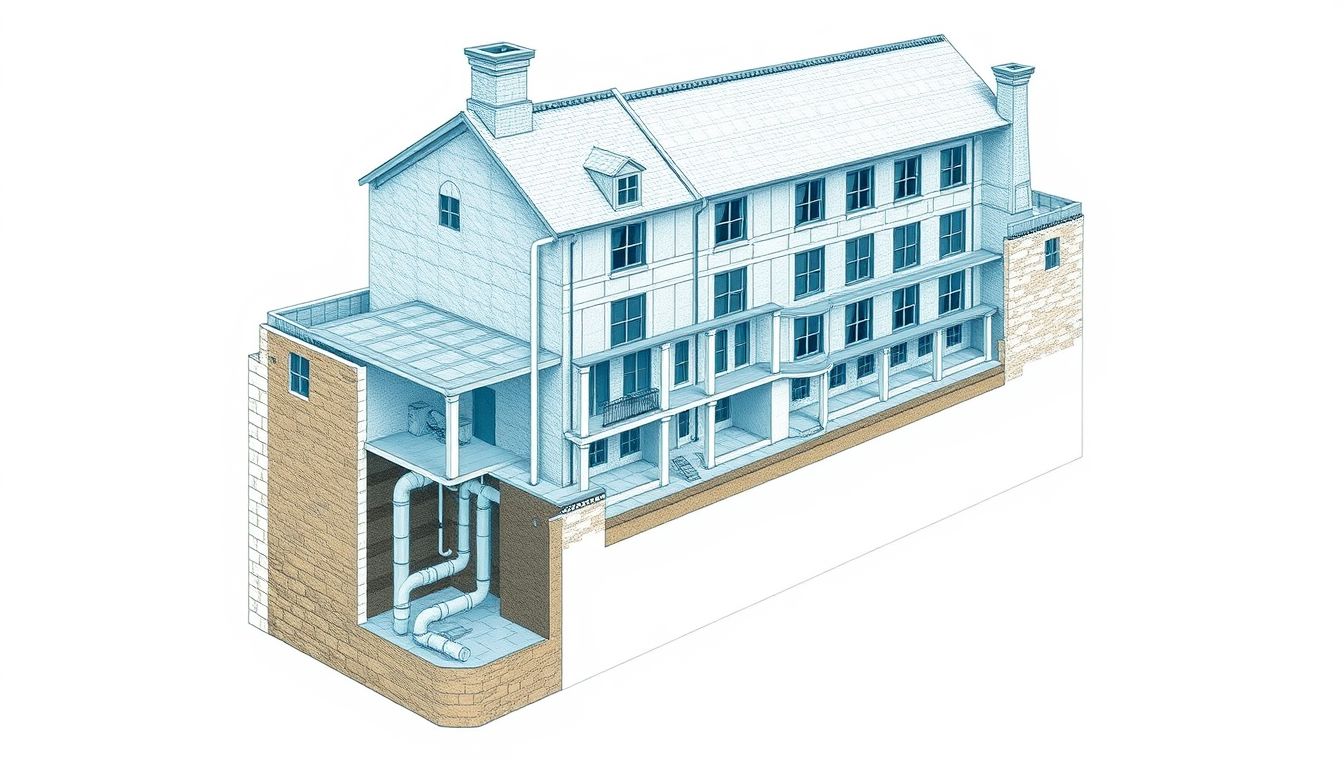
Victorian pipe infrastructure cross-section diagram

Homeowners

You want to protect the bathroom you have paid for and avoid unnecessary opening-up.

You also want a clear answer on what is actually wrong, what needs repaired, and what documentation you will receive afterwards.

Where repair is within scope and access allows, we can often complete the plumbing repair as part of the job. Where additional reinstatement is needed, such as tiling, plastering, or redecorating, we will explain that clearly so you know what comes next.

If insurance is involved, we can provide the written findings and photos your insurer may ask for. Whether the cost is covered depends on your policy.

Granite masonry with moisture seeping through joints

Landlords and letting agents

A bathroom leak in a rental property is not just a maintenance issue. It can become a documentation issue, a tenant relationship issue, and a compliance issue if it is left unresolved.

If a tenant reports water ingress, damp, or a recurring bathroom problem, a documented investigation helps show that the issue was taken seriously and investigated properly. That matters for your records, for insurers, and in some cases for wider compliance obligations under Scottish housing law.

We can provide written findings, photos, and a clear summary of what was found and what was done.

Granite masonry with moisture seeping through joints

Flat and tenement owners

In Glasgow and Edinburgh especially, a bathroom leak does not always stay within one property.

Water from the flat above may show up in your ceiling. A leak in shared pipework may look like a problem in your own bathroom. Until the source is confirmed, it is often unclear who is responsible.

That is why a bathroom leak investigation in a flat is about more than finding the leak. It helps establish where the water is coming from so the right owner, insurer, or factor can take the next step.

In Glasgow tenements, water can travel through timber floors and appear well away from the actual source. What looks like a ceiling problem in one flat may begin at a shower tray, waste connection, or failed waterproofing in another.

In Edinburgh flats and conversions, layers of alterations from different periods can make the water path harder to follow. Visible staining does not always line up neatly with the source, which is why careful testing matters.

In newer flats, wet rooms and modern shower rooms can still fail at drain details, perimeter seals, or wall-to-floor joints. These leaks often stay hidden until moisture starts affecting the floor build-up or the room below.

Bathroom Leak Detection — Clear Pricing Before We Start

A guessing approach can become expensive quickly. Paying for repeated call-outs, resealing work that does not solve the problem, or opening up large areas unnecessarily usually costs more than identifying the source properly in the first place.
We will always explain the likely scope before booking and agree the cost before starting work.

Typical options may include:

  • thermal imaging and moisture mapping survey

  • waste or pipework testing where required

  • combined investigation where the source is unclear

  • urgent attendance where availability allows

Pricing notes

  • Investigation and repair are separate stages where needed.

  • We will explain what is included before work begins.

  • If further access or reinstatement is required, we will discuss that separately before proceeding.

Not sure what applies?

Call and describe what you are seeing. We can usually tell you the sensible next step.

What Happens If You Wait

Bathroom leaks rarely stay still.

Early stage

You may only notice staining, a slight damp smell, or a wet floor that seems slow to dry.

Developing stage

Moisture spreads into plasterboard, subfloors, ceilings, or surrounding finishes. Damage becomes more visible, and mould may begin to appear.

Advanced stage

Joists, flooring, ceilings, and decorative finishes may all be affected. In flats, neighbours or shared areas may now be involved too.

The leak itself is often the smaller part of the cost. The hidden damage is what turns a manageable repair into a much larger one.

Before you call

Bathroom Leak Detection — Your Questions Answered

In many cases, no. We test first and only recommend access where it is needed to confirm or repair the source.

Can't find the answer you need?

Call our team on 01786 619 110
What to do next

Ready to Find the Source?
We can help you find out.

If water is actively coming through a ceiling, near a light fitting, or causing ongoing damage, call [Phone Number] now.
If water is near electrics, switch off at the mains first and do not investigate yourself.
If the problem is not urgent, but it keeps coming back, request a callback and tell us what you are seeing.
We will talk you through whether a bathroom leak investigation is likely to help.

No obligation. Available across Scotland.

SNIPEF Accredited Insurance-report ready Non-invasive methods Nationwide coverage