Trace and Access for Insurance
If you are dealing with water damage, a damp patch that keeps spreading, or an insurer who has asked for a leak report before approving next steps, this page explains what trace and access means, what insurers usually ask for, and how Leak Detection Stirling can help you gather the evidence clearly.
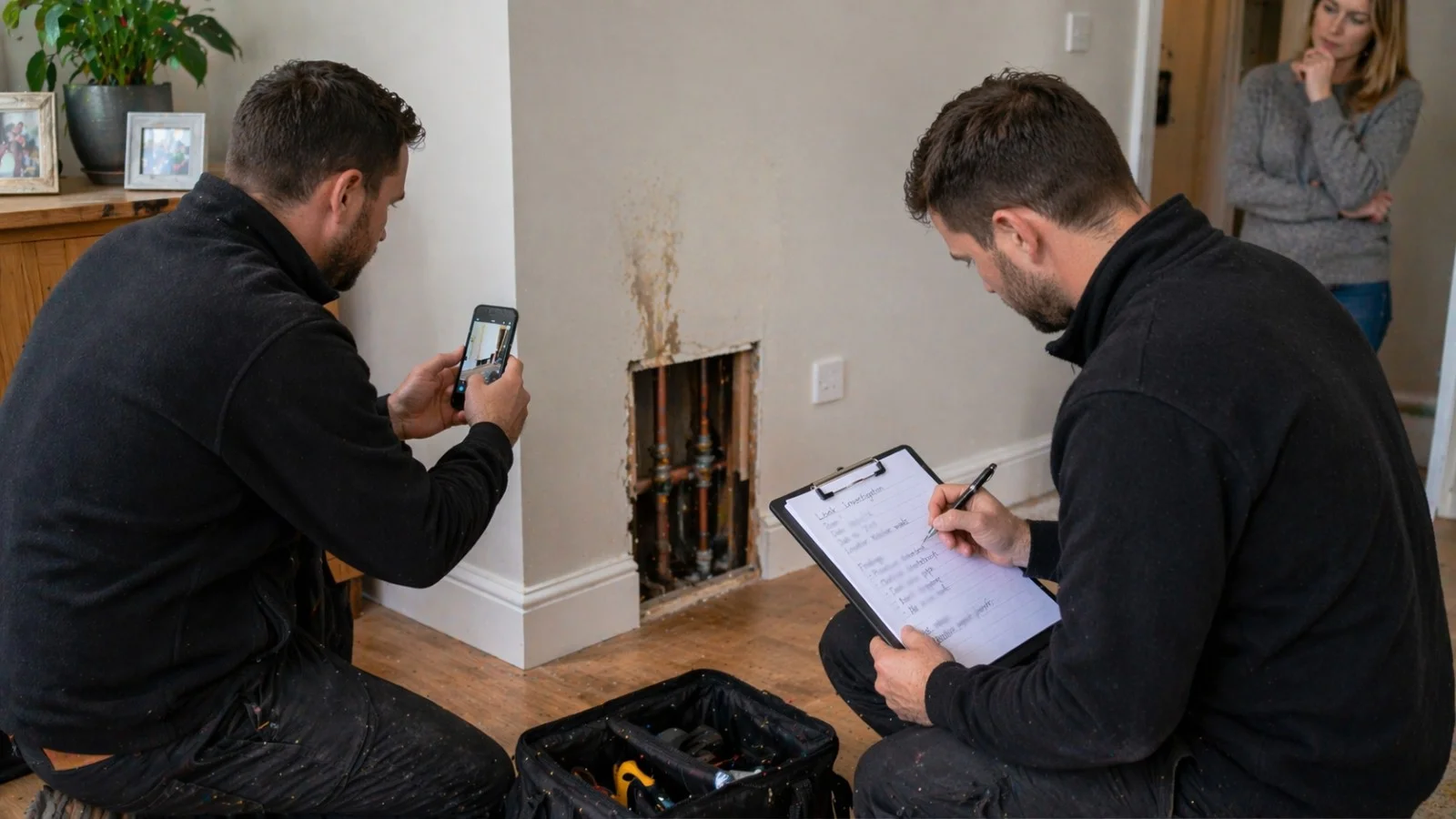
Trace and access support with written findings, photos, and documentation insurers or loss adjusters may request.
- They want to know if insurance may cover the investigation
- The insurer has asked for a trace and access report
- They need written evidence for a landlord, tenant, factor, or loss adjuster
- They are still unclear what trace and access actually means
Common reasons people land on this page
- I have a leak and want to know if my insurance may cover the investigation
- My insurer has told me to get a trace and access report
- I am a landlord and need documented evidence for my insurer, tenant file, or factor
- I am not sure what trace and access actually means
It usually means finding the leak and reaching it safely
Most buildings insurance policies that include trace and access are referring to the cost of finding a hidden leak and gaining access to it, rather than automatically covering every part of the wider repair and reinstatement process.
In practical terms, that usually means tracing the source, accessing the area required to reach it, and in some policies a separate making-good stage that should never be assumed without checking the wording.
The important distinction
Trace and access is not the same thing as the repair itself. It usually relates to finding the leak and reaching it, while the plumbing repair and wider water-damage reinstatement often sit under separate sections of the policy.
Often yes, but wording varies more than people expect
In many cases, yes, but wording varies significantly between insurers and policy tiers. The most useful first step is to search your policy wording for terms such as trace and access, finding the source of a leak, or escape of water wording that mentions source investigation.
What to check in your policy
- The cover limit
- The excess
- The exclusions
- Which policy is actually relevant
Document first if it is not an immediate safety emergency
If the leak is not an immediate safety emergency, it is usually sensible to notify the insurer before broader repairs begin so the source and any access requirement are documented first.
Starting wider works too early can complicate a claim, especially where the insurer wants evidence of source, cause, and access need.
The process in plain English
You describe the problem
Tell us what you are seeing, where it is showing up, how long it has been happening, and whether anyone has already attended.
We advise on the likely next step
We explain whether a site visit is likely to help and whether the issue sounds private, shared-building, insurer-linked, or factor-linked.
We attend and investigate
We use the most appropriate methods for the suspected leak type and test before any opening-up begins.
We explain what we found
We explain whether an active source was identified, where it is, what is likely causing it, what access is required, and whether repair is within scope.
We provide written findings and photos
Where a report is required, we provide documentation that can usually be passed to insurers, loss adjusters, landlords, letting agents, factors, or other relevant parties.
Repair and next-step coordination
Where repair is within scope, it can often be completed. Where wider reinstatement or specialist follow-on works are needed, the next step is explained clearly.
The documentation often matters as much as the visit
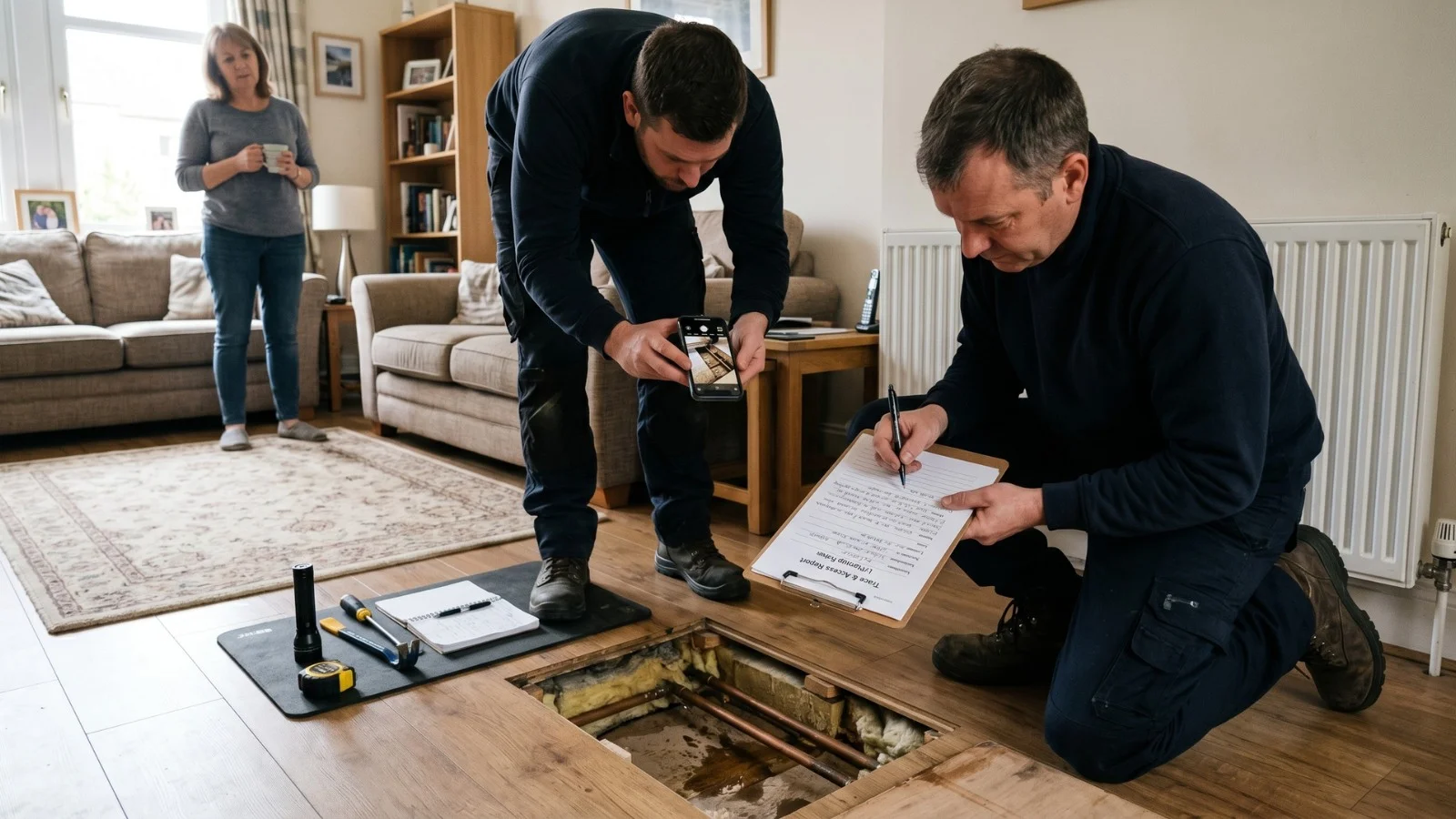
A useful trace and access report is not just a basic job sheet. It should clearly record what was investigated, what methods were used, what was found, where the source appears to be, and what access or next step is likely to be needed.
A typical report includes
- Property address and investigation date
- Summary of the reported issue
- Methods used
- Written findings on likely source and cause
- Photos and relevant imagery where applicable
- Access requirements and next-step recommendation
Shared buildings often change which policy and evidence matter
Tenement flats
The visible damage may be in your flat while the source sits in the flat above, shared pipework, the close, or the common roof. Source evidence often becomes the first practical step.
Landlords and letting agents
A dated written investigation can matter for insurer communication, tenant communication, and the wider compliance record, not just the technical diagnosis.
Factors and shared-building disputes
Where a factor or co-owner will not act without evidence, a documented leak investigation is often what moves the next decision forward.
If you need the wider insurance context
Trace and Access Explained
Plain-English guidance on what trace and access means, what it includes, and how the process usually works.
Read guideUsing Leak Detection Reports With Your Insurer
Practical guidance on what to send, what a useful report contains, and how to organise the next step clearly.
Read guideSample Reports & Documentation
See what strong documentation looks like and how report structure affects onward use.
Read guideLandlord, Tenant & Factor Responsibilities
Scotland-specific guidance on the role of landlords, tenants, factors, and source evidence in shared-building cases.
Read guideQuestions people usually ask before booking
Does trace and access include the repair itself?
Usually not automatically. It commonly relates to finding the leak and reaching it, while the repair itself may sit under a different policy section.
Do I call my insurer first or arrange the investigation first?
If it is not an immediate safety emergency, it is usually sensible to notify the insurer before broader repairs begin so source and access requirements can be documented properly.
What if the leak may be in a shared building element?
That is one of the main reasons source evidence matters. In tenements and other shared buildings, the relevant policy or responsibility often depends on where the source actually sits.
Will the report automatically guarantee claim approval?
No. The report can provide the evidence an insurer or loss adjuster may ask for, but the policy decision always remains theirs.
Need help with the practical next step?
Call or message with what you are seeing and what your insurer, factor, or landlord has asked for. We can usually explain whether a visit is likely to help and what the next step should be.