Leak Detection Stirling & Central Scotland
If you are dealing with unexplained pressure loss, damp with no clear cause, a Scottish Water letter, or water appearing from another part of the building, the first step is to establish exactly where the source is.
We provide leak detection across Stirling and Central Scotland with clear written findings and repair where the repair is within scope.
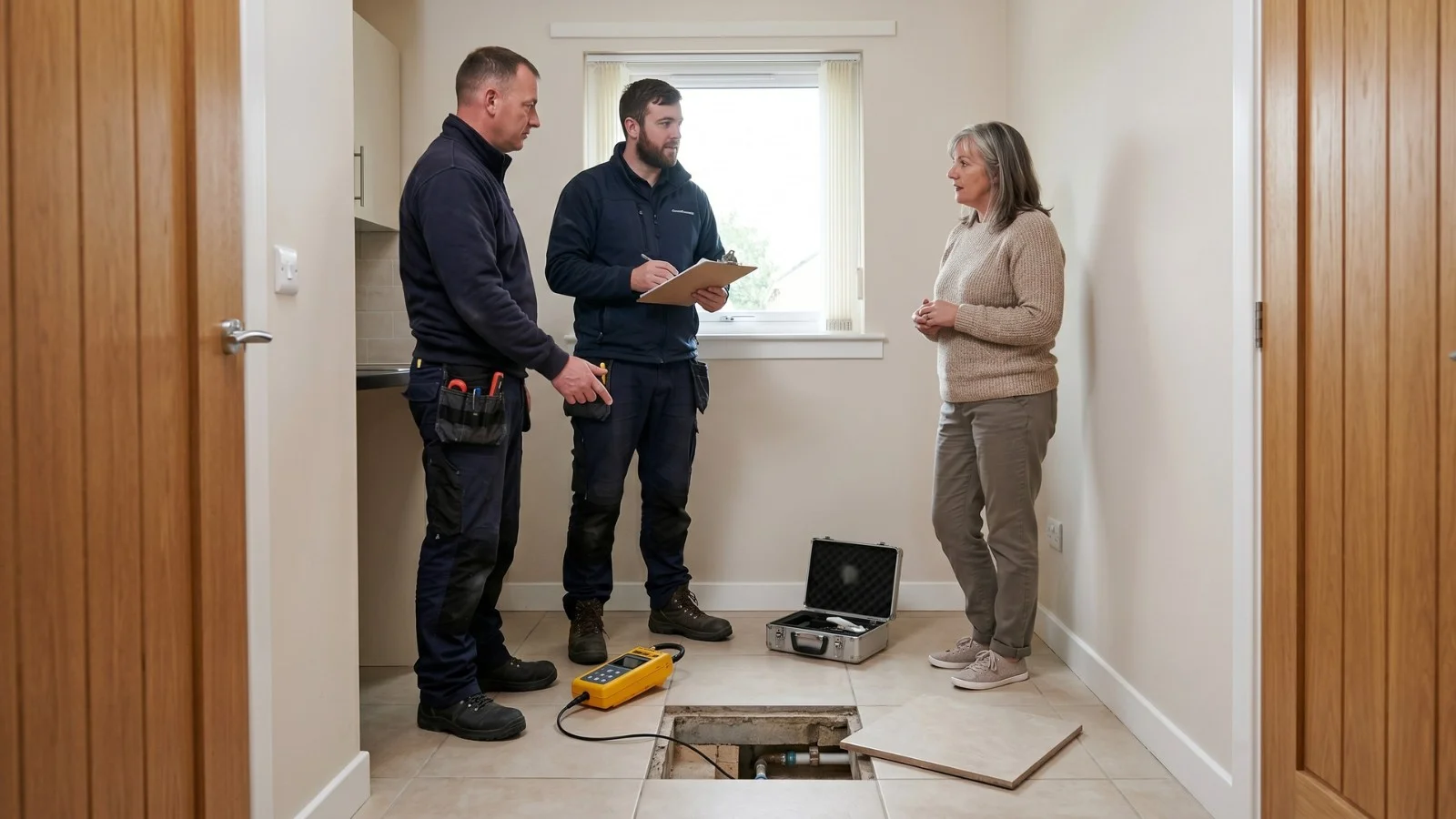
- Boiler pressure keeps dropping in a newer-build home
- Scottish Water has flagged a possible leak
- Damp is appearing in an older property with no obvious source
- Water is coming through from above in a flat or shared building
- A landlord or property manager needs a documented answer quickly
- An underground or rural supply pipe leak is suspected
The property mix changes how leaks show up
This area includes a wider mix of property types than many city-only pages, so the investigation often needs to adapt to the building, the likely water path, and whether the issue looks internal, external, shared-building, or rural-supply related.
The investigation often needs to adapt to
- Newer homes with concealed heating runs and underfloor heating
- Older stone-built homes and conversions where water travels unpredictably
- Rural and semi-rural properties with long private supply runs
- Managed buildings, rental stock, and mixed-use premises where documentation matters as much as diagnosis
Regional property patterns change the likely source route
Stirling and surrounding towns
Newer-build homes often show concealed leaks first through boiler pressure loss rather than visible water.
Older properties and flats
Water can travel through walls, ceilings, and shared structures before it becomes visible, which makes diagnosis more important than guesswork.
Rural and semi-rural properties
Long private supply runs can make underground leak location especially important before any excavation starts.
Relevant service routes for common regional scenarios
Underfloor heating and concealed heating leaks
Common in newer homes around Stirling and the commuter belt, where pressure loss may be the only early sign.
Mains and underground leak detection
Especially relevant where a Scottish Water letter, long supply route, garden leak, or driveway issue suggests the problem may be external.
Bathroom and shower leaks
Useful where water is affecting the room below or the problem keeps returning after surface repairs.
Roof and building-envelope investigation
Useful when the source is still unclear and may be weather-related rather than plumbing-related.
Landlord, HMO, and commercial cases
Where the issue affects a tenancy, a managed building, or a commercial site, the written handover often matters as much as the diagnosis itself.
A practical process from symptom to written findings
We start with the symptom and property type
We look at what is happening, what has already been tried, and whether the issue may be internal, shared-building, or external.
We use the most suitable methods
Depending on the case, that may include thermal imaging, acoustic testing, tracer gas, moisture mapping, pressure testing, or targeted inspection.
We explain the findings clearly
You are told what appears to be causing the issue, where the source is, and what the next practical step is.
We repair where within scope
Where the plumbing repair is within scope and access allows, we aim to complete it. Wider works or reinstatement are treated separately.
We provide written findings
You receive a clear record of what was found and what happens next. Where relevant, we can provide a trace and access report.
Source evidence often comes before responsibility
If insurance is involved, we can provide written findings and photos that your insurer may request. Whether a policy responds depends on the wording and your insurer's decision.
If the issue may involve another property, a shared area, or a factor-managed building, source evidence is often the practical starting point before responsibility becomes clearer.
This is especially true when managing an escape of water insurance claim, where clear documentation can be crucial to resolving disputes and ensuring a smooth claims process.
If the leak is part of an insurance claim
If your insurer has asked for a trace and access report, or if you are just beginning an escape of water claim, we can provide the comprehensive written findings and documentation they will need.
For support with your insurance claim, whether it is understanding what your policy covers, avoiding common pitfalls that lead to underpaid claims, or deciding if you should appoint a loss assessor before your insurer sends their own representative, we strongly encourage you to contact PCLA's loss assessors in Scotland for expert advice and assistance.
Questions people in this area usually ask first
Does leak detection damage screed floors or finished rooms?
Not as a starting point. The aim is to narrow the source down before any access is discussed.
What should I do after receiving a Scottish Water leak letter?
The sensible next step is to establish where the leak appears to be before anyone starts digging or making assumptions about responsibility.
Do you cover rural areas around Stirling?
Yes. If you are unsure, send the postcode and we will confirm.
Can you provide documentation for insurance or warranty discussions?
Yes. We can provide written findings and photos, but we cannot guarantee the outcome of a policy or warranty claim.
Need leak detection in Stirling or Central Scotland?
Tell us what you are seeing, the property type, and whether the issue involves a Scottish Water letter, another flat, or a shared building. We will explain the most sensible next step.