
Leak Detection for Homeowners
If you have a damp ceiling, a boiler that keeps losing pressure, or water coming through from the flat above, the first useful step is to establish the source properly before more damage spreads.
We locate hidden leaks for homeowners across Stirling, Glasgow, Edinburgh, and the wider Central Belt with a structured approach that helps reduce unnecessary opening-up.
- Boiler losing pressure with no visible leak
- Damp patch on a ceiling or wall
- Water coming through from the flat above
- Bathroom or shower leaking into the room below
- A Scottish Water leak-detected letter
- A plumber has already attended, but the problem is still unresolved
The first fear is usually disruption
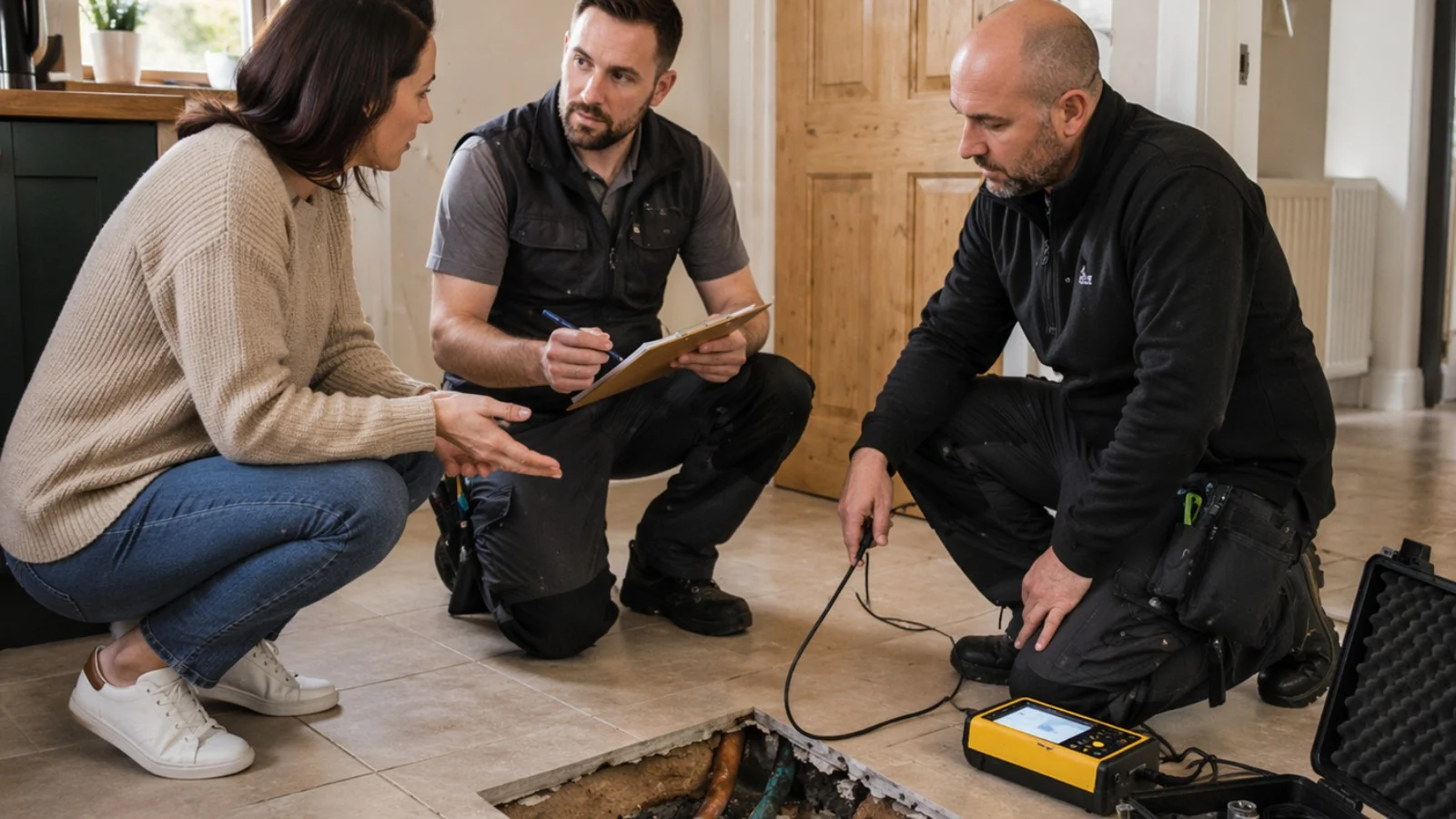
The first question is usually simple: will you have to lift floors or open walls to find it?
In many cases, no. The point of leak detection is to use the most suitable method for the property and the symptom before any access is discussed.
What the investigation is trying to do
- In many cases, no opening-up is needed as a starting point.
- The point of leak detection is to use the most suitable method for the property and the symptom before any access is discussed.
- Depending on the case, that may include thermal imaging, acoustic detection, tracer gas, moisture mapping, and targeted inspection.
Insurance may help with the investigation, but wording matters
Many buildings policies include trace and access cover. On this page, trace and access means carefully locating the source of a leak and gaining access to it where needed.
We can provide the documentation your insurer may request, but we cannot promise claim approval and whether cover applies depends on your own policy wording.
What we can provide
- Written findings
- Photos where appropriate
- A summary of what was tested
- Repair notes where work is completed
Property type often changes what the symptom really means
Tenement flats
Water often travels before it becomes visible, and the visible damage may be in a different flat from the source.
Older homes and conversions
Older walls, voids, and pipe routes can make the visible symptom misleading.
Modern homes and underfloor heating systems
In newer homes, the first sign is often pressure loss rather than visible water damage.
This is common, and it does not mean the earlier visit was wrong
A general plumber may have checked the obvious things already. That does not mean the earlier visit was wrong.
It usually means the visible symptom was not the real source, or that the problem needs a more targeted investigation before access or repair decisions are made.
A straightforward process from symptom to next step
You tell us what you are seeing
We start with the symptom, where it is showing, how long it has been happening, and what has already been tried.
We advise whether a visit is likely to help
If it sounds like a hidden leak, we explain the likely next step and what information to have ready.
We investigate the likely source areas
We use the most suitable methods for the property and the suspected leak type.
We explain what we found
You are told where the source appears to be, what kind of problem it is, and what repair or access is likely to be needed.
We repair where within scope
Where the repair is within scope and access allows, we aim to complete it. Where wider works are needed, we explain that clearly before anything further begins.
Questions homeowners usually ask first
Will leak detection damage my floors or walls?
In many cases, no. Where some access is needed, we explain what is required and why before doing anything.
Does my home insurance cover trace and access?
It may. Many policies include it, but cover depends on the wording of your own policy.
What should I do right now while waiting?
If you know where your stopcock is and it is safe to do so, turn the water off. Photograph the affected area. If water is near electrics, switch off at the mains if safe and do not investigate yourself.
What if no active leak is found?
We still explain what we tested, what we found, and what the next step may be.
Need a clear answer on what is actually causing the problem?
Describe what you are seeing and the property type. We will explain whether a leak detection visit is likely to help.