
Underfloor Heating Leak Detection
If your boiler keeps losing pressure and you have underfloor heating, the problem may be inside the floor circuit rather than anywhere you can see.
We locate underfloor heating leaks across Stirling, Glasgow, Edinburgh, and the wider Central Belt with a structured approach that helps reduce unnecessary disruption.
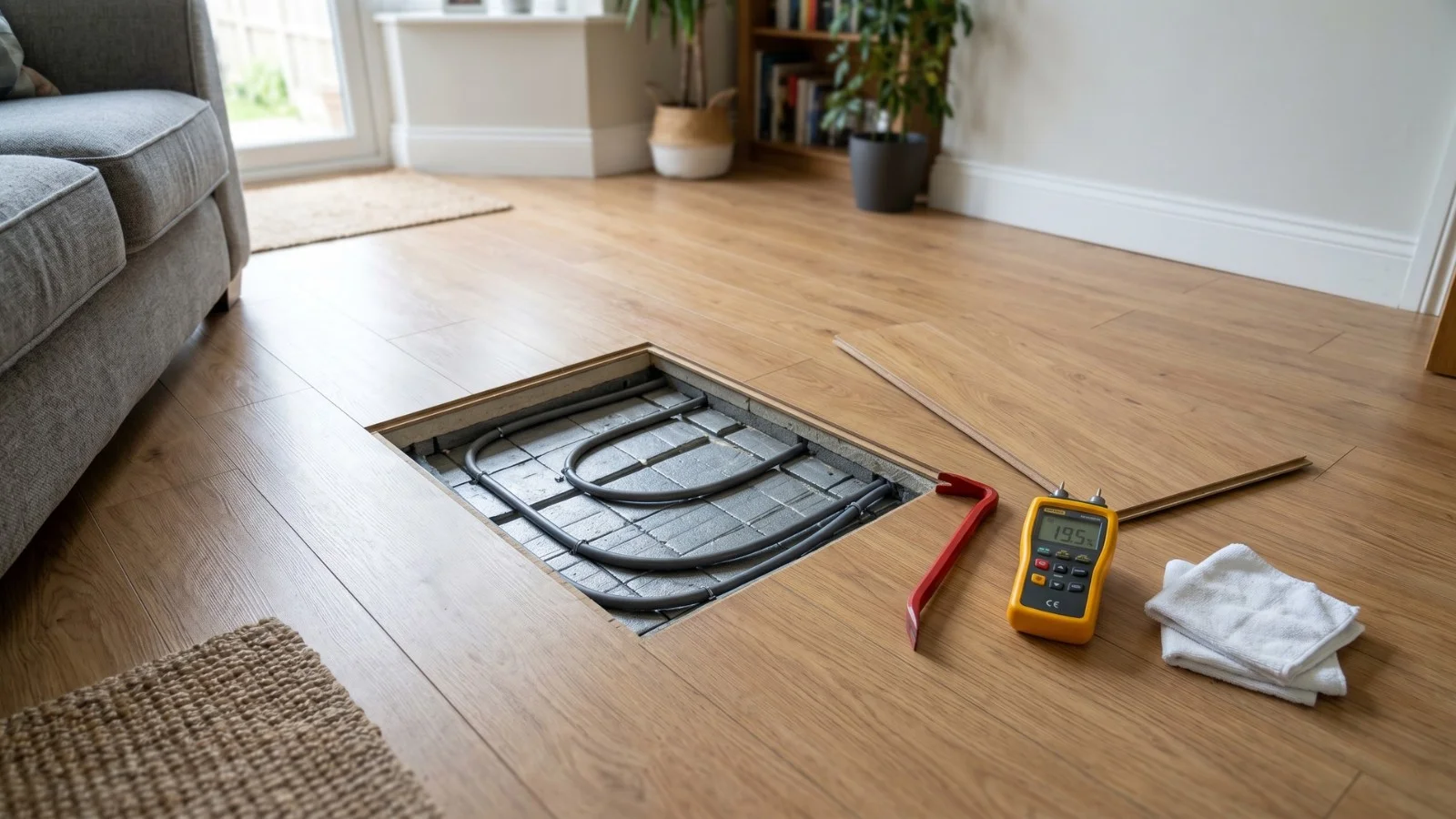
- Hidden floor-circuit leaks that are not visibly obvious
- Pressure loss where a normal plumbing inspection stops short of source confirmation
- Reducing unnecessary floor opening-up
- Clearer handover for access and repair decisions
Symptoms that often point toward the floor circuit
- Boiler pressure keeps dropping with no visible leak
- One floor zone is colder than the others
- A warm damp patch appears on the floor
- White residue or moisture shows at grout lines or floor edges
- A plumber has confirmed pressure loss but cannot find the source
Concealed pipework changes the investigation
The pipework is often embedded in screed beneath the finished floor.
That means the water may stay hidden for a long time, the visible sign can arrive late, and a general plumbing inspection may confirm pressure loss without pinpointing the fault.
Protecting the floor finish becomes a major part of the decision, which is why careful detection matters before anyone starts lifting floors.
Why it needs a targeted approach
- The water may stay hidden for a long time
- The visible sign can arrive late
- Pressure loss can be confirmed without locating the actual fault
- Floor-finish protection becomes part of the technical decision
We narrow the likely area before access is discussed
We start at the manifold and test the system properly
This helps establish whether the problem appears to sit within the underfloor heating circuit or somewhere more accessible.
We use the most suitable detection methods
Depending on the case, that may include tracer gas, acoustic detection, thermal imaging, and pressure testing.
We narrow the likely failure area down before discussing access
The aim is to avoid speculative floor removal and keep any access as targeted as possible.
We explain the findings clearly
You are told whether the source appears to sit in the floor system, what area is likely affected, and what the next step should be.
Not an unusual edge case in this region
Underfloor heating is common in newer-build homes across Stirling and the wider commuter belt, so this is not an unusual edge case.
It's also common in commercial developments around Edinburgh and Glasgow, especially where underfloor heating was installed as a standard feature.
Why that matters
- Pressure-loss problems can sit inside the concealed floor circuit
- Floor finish and access planning matter early
- Evidence-led narrowing helps avoid guesswork-led disruption
What we ask, what happens on site, and what you get afterwards
Before we arrive
- How quickly the boiler pressure is dropping
- Whether you know where the manifold is
- What kind of floor finish is above the heated area
- Whether you have plans or installation documents
On site
- Manifold inspection
- Circuit testing
- Suitable detection methods
- Explanation of findings
- Discussion of access and repair scope
After the investigation
We explain what was found, what appears to be affected, whether repair is within scope, and what the next step is if further access is needed.
The biggest concern is usually the floor finish
We do not promise that every repair will involve no damage. Some repairs need a small, targeted access point through the floor finish.
The value of specialist detection is that any access is based on evidence rather than guesswork.
What careful detection helps avoid
- Speculative floor removal
- Overly broad opening-up
- Repair decisions made without a narrowed source area
Documentation can help, but insurer approval is separate
Some buildings policies include trace and access cover. On this page, trace and access means carefully locating the source of the leak and reaching it where necessary.
We can provide written findings and photos that your insurer may request. We do not manage claims or guarantee insurer approval.
Useful outputs
- Written findings
- Photo evidence
- Clearer view of whether the floor circuit is involved
- Better basis for next-step repair planning
Questions people often ask before anyone lifts the floor
Can you find an underfloor heating leak without lifting the floor first?
In many cases, yes. That is the purpose of the investigation.
Will my floor definitely stay intact?
Not always. Some repairs need targeted access, but the aim is to avoid unnecessary opening-up.
Can you repair the leak as well?
Where access allows and the repair is within scope, often yes.
What if the problem is not actually in the floor circuit?
We will tell you. The point of the investigation is to separate those possibilities properly.
Boiler losing pressure? Find out why before anyone starts lifting floors.
Tell us what you are seeing, the property type, and whether you know the issue involves underfloor heating. We will explain whether a specialist visit is likely to help.